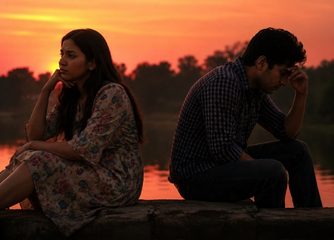
The 8:2 Problem: Why Nepali Women Avoid Dating Apps
Open any mainstream dating app in Nepal and look at who’s actually there.
According to data from DanfeMonal, roughly 80% of users on these platforms are men. That’s not a quirk or a coincidence; it’s a structural collapse. When eight out of ten people on a platform share the same gender, you don’t have a dating app anymore. You have a waiting room with no one to wait for.
The primary reasons why Nepali women avoid dating apps is because dating app safety concerns in Nepal have never been seriously addressed by the platforms themselves.
Without verified identities, women face a relentless stream of unsolicited messages, explicit content, and fake profiles. Add the very real threat of social exposure in Nepal’s tight-knit communities, where a screenshot can become gossip within hours and the decision to delete the app becomes less a choice and more a matter of self-preservation.
This hurts everyone. Men who genuinely want to meet someone are left swiping in a digital ghost town. Women who try are hit with a chaotic flood of unwanted messages from strangers they can’t verify. Modern matchmaking in Nepal won’t work until platforms are redesigned to address why women leave in the first place.
Quick Overview:
Nepali women avoid dating apps primarily because of:
- Safety concerns and online harassment
- Fake profiles and catfishing
- Privacy risks in close-knit communities
- Lack of identity verification
- Mismatch between dating app culture and Nepali relationship expectations
What Is the 8:2 Problem with Nepali Dating Apps?
An 80% male user base doesn’t just mean there are fewer women on the app; it fundamentally breaks the social mechanics that make these platforms work at all.
When women are scarce, men compensate by engaging indiscriminately. Match rates plummet. Desperation even among otherwise reasonable people shows up in opening messages. The women who are present receive an overwhelming, relentless volume of outreach, much of it low-effort or worse. Their response? They delete the app. Which means the male-to-female ratio gets even worse. Which makes the behavior even more aggressive. Which drives out even more women.
This is the Asymmetric Swiping Loop:
Women experience message overload → Women exit the platform → Male outreach becomes more aggressive → User experience deteriorates for everyone → More women leave → Repeat
What makes this particularly pointed in Nepal is the contrast with traditional matchmaking settings. In family-assisted introductions or matrimonial platforms where participation is more balanced, women do show up and engage seriously. They’re not avoiding relationships. They’re avoiding platforms that treat their presence as an afterthought.
Why Do Nepali Women Avoid Dating Apps? The 5 Real Reasons
These aren’t personality flaws or signs of being “too traditional.” They are entirely rational responses to platform design failures that were never taken seriously. And they follow a clear pattern, each one building on the last. The reasons women leave are tied directly to deep-seated nepali dating app issues like unverified profiles and missing privacy architecture.
1. Safety Concerns and Online Harassment
Dating app safety concerns in Nepal are not abstract; they are the lived daily experience of women who try these platforms. Global studies consistently show women are more likely than men to report harassment on dating platforms, highlighting that this is not just a local issue but a widespread challenge for online dating users.
The risks are consistent and well-documented:
- Unsolicited explicit images sent without warning
- Messages that escalate quickly when ignored
- Profiles with no real accountability attached to them
There’s no verification connecting a profile to a real person. No consequence for threatening behavior. And because online harassment on dating apps often follows women off-platform into Instagram DMs, WhatsApp messages, or even workplace situations, the cost of engaging is real and disproportionate.
2. Fake Profiles, Catfishing, and the Trust Gap
Trust issues in Nepali dating apps run deep, and for good reason. Without mandatory verification, these platforms operate under a fog of anonymity that attracts the worst kinds of engagement. Dating app scams in Nepal have become increasingly sophisticated:
- Fake profiles built to simulate genuine romantic interest
- Financial fraud disguised as a developing relationship
- Stolen photos used to construct entirely false identities
Because the social risk of one bad experience in Nepal’s connected communities is so high, why women don’t use dating apps in Nepal often traces back to a single incident that made the entire exercise feel untenable.
To bridge this trust gap, understanding why secure matrimonial websites for Nepalese matter becomes essential, as it highlights the strict security frameworks required to make digital spaces safe for women.
3. Privacy Concerns in a Tight-Knit Society
Free platforms draw users in with an open sign-up, then wall off every meaningful action, viewing a full profile, sending a message, and seeing
Dating app privacy concerns that Nepali users describe are not paranoia; they are an accurate read of social geography. Kathmandu functions like an extended neighborhood where professional circles, family connections, and social groups overlap constantly.
The specific threat that drives women away is the screenshot. A profile gets captured without consent, shared in a WhatsApp group, and turned into gossip before the person even knows it happened. This is why there are fewer women on Nepali dating apps than the numbers suggest; many create profiles, encounter this exposure risk within days, and leave quietly.
who viewed you, behind a paywall. The user invests time and emotional energy before discovering the walls.
The result: users end up paying anyway for a platform that was never designed around their success. The cost arrives in money, exhaustion, and broken expectations with no managed outcome waiting at the end.
4. Western Tech vs. Nepali Dating Culture
Swipe-based apps were designed for casual dating in Western markets where low-stakes, exploratory connection is the norm. Nepali dating culture and dating apps don’t map onto each other cleanly. Most Nepali singles, whether in Kathmandu, London, or Sydney, are looking for someone worth investing in, evaluated on the following:
- Shared values and life direction
- Family compatibility and cultural alignment
- Long-term intent, not short-term availability
Online dating challenges for women in Nepal aren’t just about safety. They’re about purpose. Selecting a potential partner based on a photo is not the same cultural act in Kathmandu as it is in New York.
5. The Lack of Any Meaningful Accountability
Automated algorithms were trained on English-language data and Western behavioral norms. In practice, this means they consistently fail Nepali users:
- They do not flag Nepali-language threats
- They miss the coded language used for harassment in Kathmandu’s digital spaces
- Reporting systems exist in theory but result in little action and no visible deterrent
Until platforms invest in human moderation that understands local context, accountability will remain fictional. And women will continue to make their choices.
If you are ready to experience a dating ecosystem designed with your safety and intentions in mind, you can create your verified account here.
How Does the Gender Gap Get Worse Over Time?
Left unaddressed, the 8:2 problem doesn’t stabilize. It accelerates.
Women exit. Message volume on those who remain intensifies. New female users arrive, encounter the same hostility, and leave just as quickly. The gender imbalance on dating apps that Nepal experiences doesn’t plateau; it deepens with every cycle.
The structural issue is that none of the parties causing the problem have an incentive to fix it. Men who are frustrated engage more, not less. Platforms optimized for engagement metrics count this as activity. Women leave silently, and their absence doesn’t show up on a dashboard as a design failure; it just looks like lower female sign-ups.
The negative feedback loop only breaks when platform design changes. It doesn’t fix itself.
How Does the 8:2 Ratio Affect Men on Dating Apps?
It would be easy and wrong to read this as an article about women’s problems that happens to mention men. The gender imbalance on dating apps that Nepal experiences punishes everyone, and the men who use these platforms pay a real price.
The challenges of finding genuine matches in Nepal on mainstream apps are significant. Match rates are low. Responses are inconsistent. Men who behave well and approach these platforms with real intent are competing in a system that rewards volume over quality. Ghosting is normalized not because women are unkind but because the volume of messages makes selective response the only sustainable strategy. The result is burnout and a creeping suspicion that digital matchmaking simply doesn’t work.
The men who suffer most from the 8:2 problem are exactly the ones who least deserve to: those who came with good intentions, behaved with decency, and still found nothing on the other end. Which is precisely why fixing the experience for women isn’t a concession; it’s the only way to build something that works for anyone.
Why Nepali Women Feel Stuck Between Dating Apps and Matrimonial Sites
If mainstream apps are too chaotic, the obvious alternative seems to be matrimonial platforms. But for a significant and growing segment of Nepali singles, those don’t work either.
Traditional matrimonial sites are built around a specific model: family-led, parent-managed, and oriented toward first-time marriage between individuals of compatible caste, religion, and social standing. That model serves some people well. It leaves out a lot of others.
Furthermore, the traditional route introduces a completely different set of pressures. From family over-involvement to outdated rigid criteria, the list of Nepali matrimonial site problems leaves independent women feeling just as cornered as they do on swipe-heavy dating apps. The modern independent professional simply doesn’t fit the matrimonial template.
The modern independent professional doesn’t fit the matrimonial template. She might be
- In her early 30s or older, past the typical matrimonial window
- Living abroad with a dual cultural identity to navigate
- Previously married, divorced, or a single parent
- Simply someone who wants to meet people on her own terms, without a rishta process
And she’s not alone. LGBTQIA+ Nepali singles, seniors re-entering the dating world, and anyone who doesn’t fit the traditional mold face the same dead end. Women and online matchmaking in Nepal have been left without a middle option that respects that complexity. That gap is not small. It’s where most of the interesting, independent, hard-to-reach users actually live.
What Would a Dating Platform Need to Actually Earn Women’s Trust?
Women’s safety on dating apps isn’t a feature request; it’s the baseline. The platforms that will actually solve this problem are the ones that make safety and trust a structural reality, not something buried in the settings menu.
- Private, Members-Only Profiles: No public browsing, no screenshots, no social exposure
- 100% Identity and KYC Verification: Every user verified before access, making fake profiles on dating apps in Nepal structurally impossible
- Zero-Tolerance Harassment Policy with Real Enforcement: Human reviewers not algorithms with visible and permanent consequences for harmful behaviour
- Culturally Sensitive Matching Design: Value alignment built around life goals and cultural context, not a Western template
- Affordable or Discounted Access for Women: Lowering the entry barrier signals that women’s presence is valued, not assumed
Therefore, understanding why free Nepali matrimony sites attract the wrong people reveals how a “zero-cost” model compromises user quality and opens the floodgates to bad actors.
When these foundations are in place, trust follows. And with trust, women stay.
How DanfeMonal Is Solving the 8:2 Problem
DanfeMonal isn’t built around these problems as an afterthought. We are the foundation.
- Private, verified-only profiles: Visible only to verified members. No screenshots, no public browsing, no uninvited strangers.
- Mandatory identity verification: Every member is who they say they are; the anonymity that enables catfishing and harassment simply doesn’t exist here. When women have a concrete reason to trust what they’re walking into, the Nepali dating app user ratio begins to correct itself naturally.
- Matching built around intention: A genuine, human-guided process connecting people on values, life goals, and compatibility, not photos. This is the lahmi-in-shining-armour approach: discreet, curated, and entirely human.
- Ladies first by principle: Women pay 50% less. Not a promotion. A structural commitment.
- Fully inclusive by design: LGBTQIA+ members, divorcees, single parents, and seniors are all equally welcome. DanfeMonal was built for all of Nepali society, not a narrow slice of it.
- Certified and private: Operating under UK law, with GDPR, SOC2 Type II, PIPEDA, and EU-US Data Privacy Framework certifications. Your data stays yours.
For everyone who has grown tired of dating, DanfeMonal is the best and secured matrimonial site for matchmaking and dating for Nepalese singles.
Final Thoughts
The 8:2 problem is a design problem wearing the costume of a cultural one. It’s tempting to read women’s absence from Nepali dating apps as reluctance, tradition, or conservatism. The reality is more straightforward: these platforms were built without any serious consideration of what women need to feel safe enough to stay. And without safety, nothing else matters.
Fixing this doesn’t require a revolution. It requires platforms to make deliberate choices about verification, about moderation, about privacy, about intent. When those choices are made seriously, women come back. When women come back, the experience improves for everyone.
Modern romance in Nepal doesn’t need to be a choice between chaos and a matrimonial process that doesn’t fit your life. There’s a middle path. It just requires a platform that was actually built to find it.
Done settling for platforms that weren’t built with you in mind? DanfeMonal is built specifically for Nepali singles who want something real, private, verified, and intentional. Explore the DanfeMonal FAQ Portal and find clear answers about identity verification, screenshot protection, and how we maintain a balanced, intentional user community.
FAQs
Why do Nepali women avoid dating apps?
Nepali women often avoid dating platforms due to safety risks, unverified profiles, online harassment, and the vulnerability of privacy exposure within close-knit social circles. Because many platforms lack rigorous identity checks or local moderation, the personal and social cost of using them frequently outweighs the potential benefits.
Are dating apps safe for women in Nepal?
Most mainstream, global dating apps do not provide adequate safety safeguards tailored to the local context. Weak automated moderation, a high volume of unverified accounts, and open-browsing algorithms create real risks of persistent harassment, catfishing (fake identities), and unwanted social exposure.
Why is there such a massive gender imbalance on dating platforms?
It creates a compounding cycle: women leave or avoid the platforms due to privacy risks and unsolicited messages, which increases the male-to-female ratio. This growing imbalance places disproportionate attention and pressure on the remaining female users, driving further departures and leaving the apps heavily male-dominated.
How does this gender imbalance affect men in Nepal?
The shortage of active female users directly impacts men through exceptionally low match rates, minimal response frequencies, and the discouraging experience of genuine communication efforts going unrewarded. Improving safety metrics for women is the single most effective way to improve the ecosystem for men.
What unique trust issues exist in Nepali online dating?
In Nepal’s highly connected communities, a single negative online encounter or privacy leak carries heavy, long-term social consequences. Trust is low because unverified profiles allow users to act without accountability, making deceptive or harmful behavior completely consequence-free for the perpetrator.
How can dating platforms attract and retain more women?
Marketing campaigns do not fix systemic safety concerns. Platforms can only alter female participation rates by implementing structural changes: mandatory local identity verification, private or member-only browsing settings, and active human moderation teams that understand cultural nuances.
How can women protect their privacy on current mainstream apps?
To manage risks, women should keep initial communications strictly inside the app’s built-in chat features, avoid sharing social media handles or phone numbers early on, and explicitly verify a match’s identity before agreeing to meet. Choosing apps with built-in profile hiding or stealth modes also limits unwanted exposure.
Are traditional matrimonial sites safer than standard dating apps?
Generally, yes. Matrimonial sites usually attract individuals seeking serious, long-term commitments and often mandate more rigorous background checks, detail-oriented profiles, and family involvement. However, digital safety still depends heavily on the specific site’s verification protocols and privacy features.